If you’ve got thyroid disease, you’ve probably run into the same warnings again and again: avoid gluten, avoid dairy, and your thyroid will (hopefully) calm down. It makes intuitive sense, and for many people it even feels personal. But here’s the part that often gets lost in the noise: gluten and dairy are not “molecularly mimicking” thyroid tissue. They don’t need to be explained through inflammation, leaky gut, or blood sugar patterns to make sense.
There is a more practical link that shows up during food production. The big common thread is iodine contamination. And when your thyroid is sensitive, iodine load matters more than most people realize.
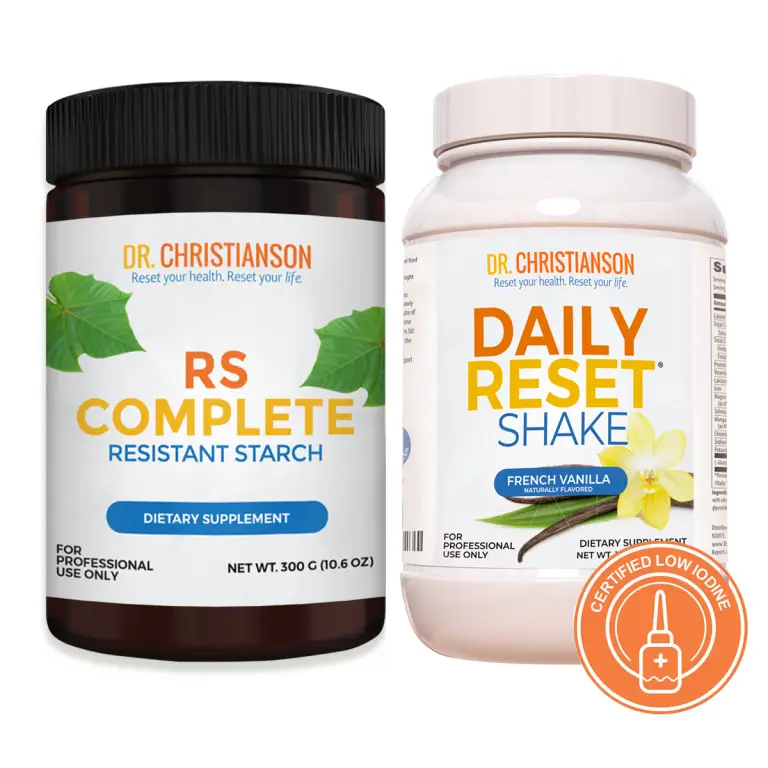
Recommended Product: Daily Reset Shake + RS Complete Bundle is a a powerful duo. Whether you’re starting a reset or doubling down on results, this bundle offers a simple, science-backed strategu to support metabolic healing from the inside out. Click Here
Table of Contents
One reason people get frustrated with diet for thyroid health is that recommendations can feel impossible to reconcile. You may see gluten-free diets, anti-inflammatory diets, Mediterranean-style eating, AIP (Autoimmune Protocol), and more. The truth is, all of those diets can help some people some of the time.
The missing piece is that with thyroid disease, what matters most are the mechanisms that are actually driving symptoms and autoimmunity for a real subset of people. In many cases, the “gluten” story and the “dairy” story are less about the headline ingredient and more about the iodine load hiding inside highly processed foods and animal-product production methods.
So what’s the common thread?
It comes down to iodine load. Iodine can be added during the processing of grain products in ways that are not obvious from the ingredient list. You might see it labeled as something like iodized dough conditioners, but not every label makes it easy to identify. And in commercial bread, iodine levels can be extremely variable and at times very high, with measurements reported as high as 600 to 1,000 micrograms per slice.
To put that into thyroid-health context: if you’re dealing with thyroid disease, most people do not want to push iodine too high. A common practical target is staying under about 200 micrograms, and some people do better even below 100. When a single slice of bread can contain dramatically more than that, your thyroid may not tolerate it well.
That is one reason many people notice improvement when they cut out gluten products. They are also cutting out a large source of processed grains where iodine contamination is more likely to occur.
Here’s one important wrinkle: even some gluten-free products can contain iodine contamination. So it’s not simply “wheat” or “gluten.” It’s highly processed grain products in general, including some “natural” versions.
If you want the best odds of supporting Thyroid health, focus on foods you can prepare at home. Many people with thyroid disease do well using flour and baking at home, especially when they use whole grain products as side dishes.
That does not mean every form of flour is automatically “safe” for every person. Some people may also have blood sugar sensitivity that affects them. But from an iodine standpoint, the biggest risk tends to cluster around pre-made bread and baked goods.
If you are trying to reduce iodine load, these are the categories that often matter most:
And again, some gluten-free versions may also be exposed to iodine contamination, including products that use iodized dough conditioners. The label may not always capture what you need to know.
––Key takeaways: The inconsistency of the gluten-free response suggests that the connection between processed grain products and thyroid issues is often due to iodine contamination, not gluten itself.
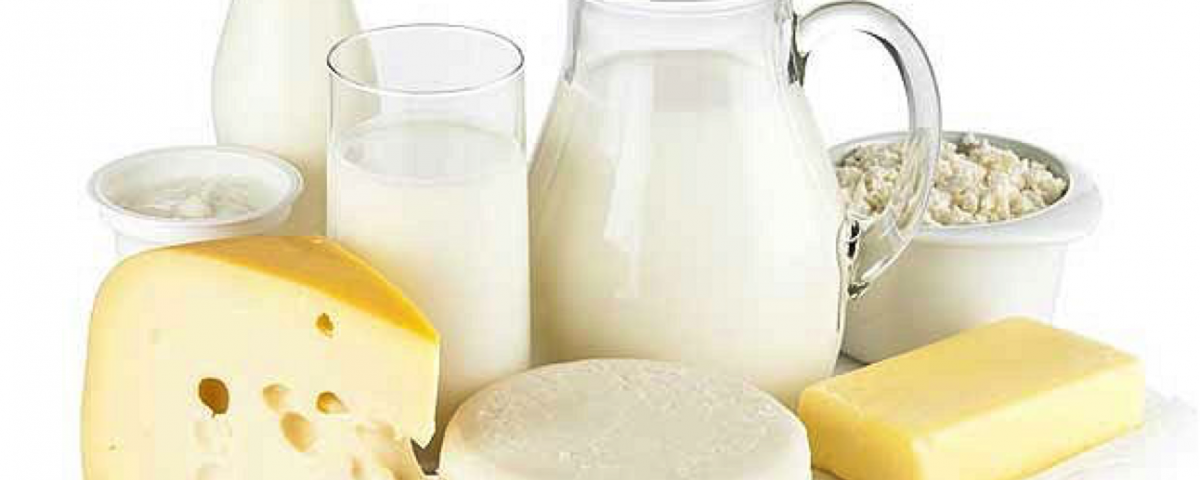
Now let’s move to dairy. Many people treat dairy and thyroid disease as two separate battles. But they can overlap for the same underlying reason.
The core issue is not “milk molecules.” It’s iodine contamination that may occur during production. Certain iodine-containing compounds are used as sanitizers for dairy operations. They may be used to sanitize cow teats directly, and they may also be used in the mixing tanks. In addition, iodine can be present because of how feed is managed, including cases where cheaper feed proteins are used.
When iodine is applied in ways that increase its concentration, milk can end up carrying a higher iodine load than would otherwise be expected.
Often, organic and free-range products may be somewhat lower in iodine. There are also some farms working on iodine-free or lower-iodine processing and verification. That said, even when dairy is “better,” it may not be low enough to take you out of the general category if your thyroid is sensitive.
This is why the approach is usually about keeping iodine on the lower side rather than assuming every “good” label automatically makes iodine safe.
Healing thyroid health is often less about blanket restriction forever and more about strategic timing and total intake.
In the Thyroid Reset Diet framework, the initial “reset” phase leans toward temporarily lowering iodine exposure. One practical guideline discussed is avoiding mammal-based dairy (cow, goat, sheep, camel) during that correction period.
After thyroid function improves, the goal shifts. You can increase variety and move toward less restrictive patterns. At that point, organic dairy can become a “yellow light” option, meaning a serving or two a day may be reasonable for many people, assuming there are no other issues with dairy for you personally.
But if you want an even cleaner workaround, the simplest strategy is often choosing plant-based dairy for thyroid.
Plant-based options like oat milk, almond milk, rice milk, and soy-based products give you more control over the iodine story. There used to be more concern about certain additives (including carrageenan) and hidden sources related to seaweed, but the emphasis now is on checking ingredients and watching for iodine-adjacent additives that are harder to spot. Specifically, keep an eye out for label ingredients related to seaweed or alginate-type substances (such as carrageenan, agar, or alginates), because those can be hidden versions of iodine depending on the product.
––Key takeaways: Dairy’s connection to thyroid issues stems from iodine contamination during production, such as from sanitizers used in dairy operations. Plant-based dairy serves as a thyroid-friendly alternative because it offers more control over iodine intake, though users should check for seaweed-derived additives like carrageenan or alginates.
It’s not just gluten foods and dairy that can influence the iodine equation. The real target is your total iodine intake. That’s why the question becomes: “How do I test my iodine?” In an ideal world, everyone would do a quick test and get a neat number. But iodine behaves differently than many nutrients. It’s reactive, and blood levels can be hard to interpret accurately at the individual level. The more realistic issue is that testing variability can make results less dependable for one person.Instead, a more useful method is an iodine inventory: calculate iodine from your diet, salt, supplements, thyroid medications, personal care products, and even certain dyes. This is often where people discover surprising sources. In practice, the goal is to figure out your intake and then adjust it toward a healthier range for your thyroid.

P.S. Whenever you are ready, here is how I can help you now:
Dr. Alan Glen Christianson (Dr. C) is a Naturopathic Endocrinologist and the author of The NY Times bestselling Hormone Healing Cookbook, The Metabolism Reset Diet, and The Thyroid Reset Diet.
Dr. C’s gift for figuring out what works has helped hundreds of thousands reverse thyroid disease, heal their adrenals, and lose weight naturally. Learn more about the surprising story that started his quest.